 People & Bridges. A Story of One Passion.On those who brought the blues to Russia
Dedicated to those who cared
People & Bridges. A Story of One Passion.On those who brought the blues to Russia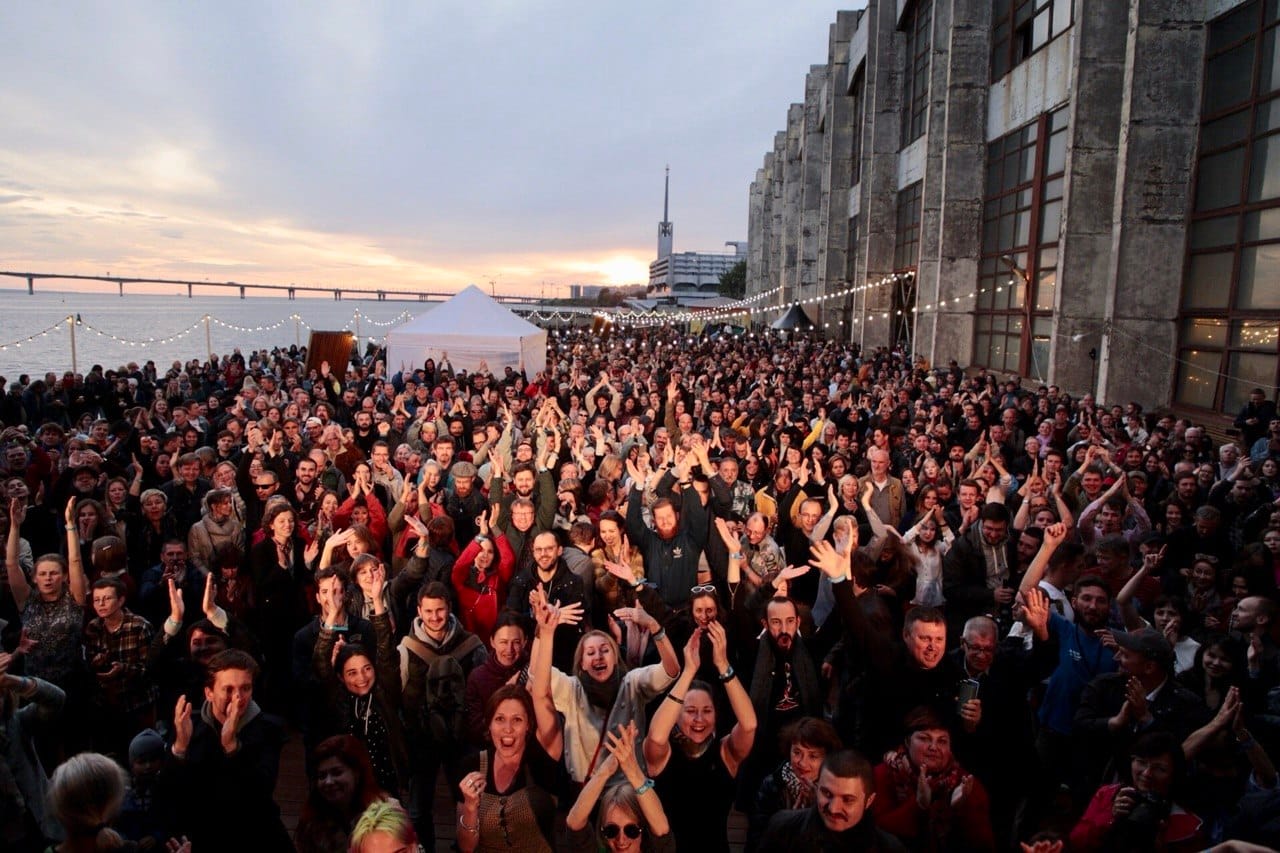
Vladimir Rusinov, creator of "Bridges," on why a true blues festival is needed and faith in the impossible.
Junior Wells and Buddy Guy grace the stage at Bridges 2019.
Mass stereotypes that arise at the word "blues" in Russia are so boring that you don't even want to list them, but a saxophone will definitely be mentioned among them, which, perhaps, isn't even that bad.
In many cases, when a Russian person loves blues, they remain alone with it. They put on a record and begin to evaluate what they hear through their own life experience and conceptual framework.
And since this doesn't align with any surrounding context or any standards, a person can come up with quite a unique explanation for what they're hearing.
If Mikhail Mishuris ever publishes a book called "Memories of Papa Blues's Guests" about everything those guests told him, it would be such a read that Zoshchenko would nervously smoke off to the side. There were some absolutely stunning opinions there about blues artists, musicians.
Sometimes people band together in groups of five to ten and call themselves the "main blues musicians" of their town. Then comes a difficult struggle of wounded pride and lack of recognition: they conclude that the town simply doesn't love blues.
They sense somehow that they don't belong here, but they do love the music, and so they start wrestling with questions about norms and standards. And that struggle leads to a very inspired, but quite specific perspective—one that can even spark conflict over who among these ten people truly understands what "Chicago blues" means.
And yet blues really does exist. Not only in the form of an incredibly rich history, tradition, connections to all adjacent genres, its creators, heroes, humble geniuses, an entire recording industry and much else besides. It's just that all of this is so very far away and often too long ago from the listener who suddenly fell in love with this music in Russia.
I'm not talking about the purity of the term. The word "blues" can be slapped on anything — a biker festival, Russian rock, a jazz project, singer-songwriter music, or a major city program. But that doesn't create the music itself. Blues exists independently of the labels.
The Mostov team and festival participants in 2019
And we, the Mostov team, really wanted to help all these people. We wanted to personally introduce them to this history. There's Bob Margolin, he comes, he's one of those very people. There are the current John Nemeth and Mike Ledbetter, many others just as authentic – come to the festival – we tried to give real contemporary context to the blues – so that the connection between you, all of us, and the world could happen.
Mike Leadbetter and Bob Margolin played together only once, and it was at Bridges 2018
There's enough information out there now, but people usually draw conclusions from the community they're in. In our case, their understanding of blues often becomes isolated and cut off from the living source of this music. Because it's not just about information — it's about all the context that surrounds us.
The task of "Mostov" was to create an environment where people would hear and understand everything themselves - they wouldn't need anyone to explain who is a legend and who plays well - people actually understand all of this perfectly well - if only given the chance to see and hear it themselves.
Bob Margolin at the "Bridges"
And it's important that the festival wasn't made in order to "create a successful event." Our task was to change something around us.
So that these little islands of pleasure that we live for—when we perform in small clubs, or just hang out, or bring someone new—so that these islands would expand and draw in more people. And so that these islands themselves would become part of the bigger world.
Also needed is new experience, not an annual review of everyone we already know perfectly well. And it's not necessary to have 20–30 bands performing at the festival at once. I think six or seven ensembles is ideal: each plays a completely full set, rather than having someone start at noon and the last group perform at midnight, with nobody listening to either.
And a full set is not a matter of comfort. An artist needs time to open up and say something to the people. In a short festival slot, a musician is forced to show their calling card. In a full set, music has time to actually happen, because for such a festival, music is the center, not decoration.
John Nemet at the Bridges in 2019
For me, and for the entire team, it was extremely important that the content be substantive—that what happened wouldn't just repeat itself from festival to festival. We needed to engage people, to show them all the beauty of what we ourselves love.
And of course the festival was operating at a loss, quite a significant one. Ticket sales covered about a third of expenses. I actually knew how to break even on the festival, but I didn't even try to do that over all three years, despite the fact that it was consuming a third of my annual income. I assumed that once Mosty grew larger, they'd be able to finance themselves, but you had to move toward that calmly. And this wasn't patronage — it was the price of complete independence.
Kid Andersen, Aki Kumar, Vladimir Rusinov, and Ksenia Dubrovskaya at Bridges 2019
Katya Perelygina, our manager for all matters, said that "Mosty," if it had continued, could have done a great deal to popularize blues and change how people imagine it. And it's true—that was actually the idea—to connect the world we live in with the real vast world of deep, living, meaningful music, with all its culture, history, and present.
You can, of course, doubt whether we would have succeeded — but if you believe in such things, you can make them real.
Rick Estrin and Vladimir Rusinov on stage after the Mosty 2019 festival
We are very far from organizing a festival again right now. But perhaps that's precisely why it became especially clear to me that our "Mostys" were neither the first nor the last. In Russia and beyond, there were enormous numbers of people who, without any attempt to become famous or make money, were doing and continue to do everything to make this music penetrate ever deeper into the fabric of the country and its culture. Many of these events have already been forgotten, but without them there would be neither our history nor countless others…
That's why we wanted to remember them, record them, and inspire ourselves and everyone who, out of pure love for music, is ready to build blues bridges in this amazing world. Because if you believe in such things, you really can make them real.